
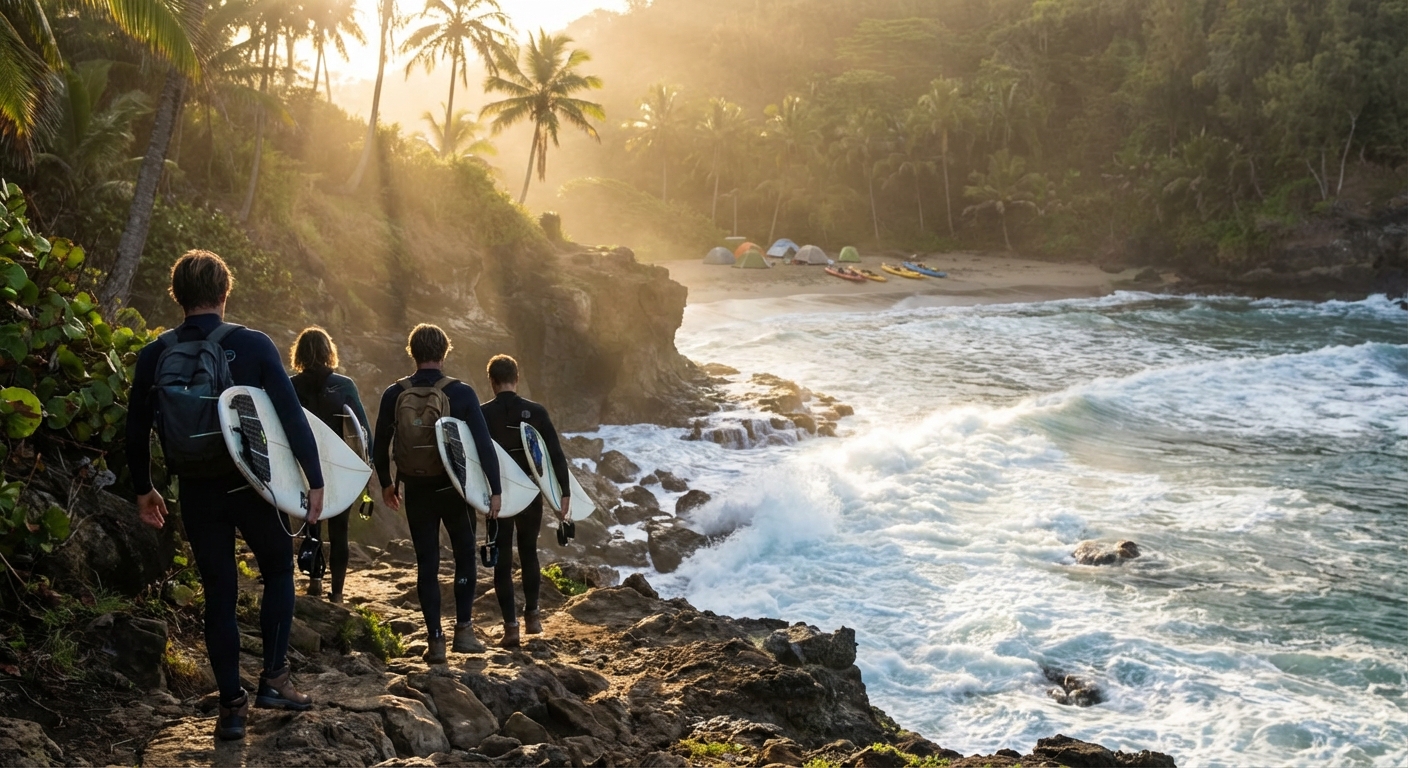
Not all beaches are created equal—and neither are beach trips. Before you chase flight deals, decide who you are on the sand.
Step 1: Choose Your Beach Personality
Ask yourself:
- Do you crave waves and wind (surfing, kitesurfing, sailing)?
- Do you prefer calm coves (snorkeling, paddleboarding, easy swims)?
- Are you into trekking and cliffs (coastal trails, viewpoints, wild camping)?
- Or culture and food (fishing villages, coastal cities, night markets)?
Match Your Style to a Destination
- Wave hunter: Try Ericeira (Portugal), Siargao (Philippines), or Santa Teresa (Costa Rica).
- Lagoon lover: Look at Caye Caulker (Belize), Aitutaki (Cook Islands), or Candidasa (Bali’s east coast).
- Hiker at heart: Consider Cinque Terre (Italy), Kalalau Trail (Kauaʻi, Hawaii), or Abel Tasman Coast (New Zealand).
- Culture chaser: Think Essaouira (Morocco), Hoi An + An Bang Beach (Vietnam), or Salvador + Praia do Forte (Brazil).
Pick two destinations that fit you, then compare flight costs, weather, and crowd levels for your travel window.
Step 2: Time It Right (Weather, Crowds, and Costs)
Check More Than Just "Best Time to Visit"
Look up:
- Rainfall and storms (especially in cyclone/typhoon zones)
- Water temperature if you plan to dive or surf
- Local holidays that might mean crowds and higher prices
- Wind patterns if you’ll sail or kite
- Softer prices on rooms
- Manageable crowds
- Still‑good weather (and more locals than tourists)
Pro move: Aim for shoulder season—two to four weeks before or after peak. You’ll often get:
Step 3: Build an Adventure‑First Itinerary
Instead of anchoring your trip around a resort, build it around experiences.
The 3‑Day Adventure Template
Use this structure for a long weekend beach escape:
Day 1 – Arrival + Orientation
- Easy coastal walk or bike ride
- Sunset viewpoint or sail
- Local seafood dinner
- Morning surf lesson, dive, or kayaking tour
- Midday rest (hammock, book, beach nap)
- Evening street food crawl or live music
- Rent a scooter/car or take a bus to a lesser‑known beach or cove
- Picnic or beach barbecue
- Night swim or stargazing on the sand
Day 2 – Big Adventure Day
Day 3 – Go Off‑Script
For a week, stack two or three of these templates, with at least one rest day.
Step 4: Budget Like an Explorer, Not a Tourist
Where to Splurge
- Guided adventures with solid safety records (dives, surf coaching, sailing)
- Location for at least a few nights (waking up right on the beach is priceless)
- Travel insurance that covers watersports and medical evacuation
Where to Save
- Take public buses or shared shuttles instead of private transfers.
- Eat main meals at markets and local cafés.
- Choose simple guesthouses a block or two off the sand.
- Shoestring backpacker: $30–$50 (dorms, street food, DIY activities)
- Comfortable explorer: $60–$120 (private rooms, a few tours)
- Splash‑out adventurer: $150+ (boutique stays, frequent guided trips)
Daily budget ballpark (excluding flights):
Step 5: Pack for Movement, Not Just Sunbathing
Essential Adventure Beach Packing List
Documents & money
- Passport + 2–3 physical copies
- Travel insurance details (printed + digital)
- Debit/credit cards + some local cash
- 2–3 quick‑dry shirts (one long‑sleeve sun shirt)
- 1 lightweight hoodie or fleece (coastal evenings can surprise you)
- 2 swimsuits (rotate so one’s always dry)
- 1 pair lightweight pants + 1 pair shorts
- Underwear + 2 pairs wool or synthetic socks
- Trail runners or sturdy sneakers
- Flip‑flops
- Water shoes or reef‑safe sandals
- 20–30L daypack
- 10–20L dry bag (for boats and wet days)
- Snorkel mask (if fit matters to you)
- Headlamp (for pre‑dawn hikes, power cuts)
- Refillable water bottle (or collapsible bladder)
- Reef‑safe sunscreen (at least SPF 30)
- Aloe gel or after‑sun lotion
- Basic first‑aid kit (bandages, antiseptic, pain relief, rehydration salts)
- Motion sickness tablets if boats are involved
- Power bank
- Universal adapter
- Waterproof phone pouch
Clothing
Footwear
Gear
Health & safety
Tech
Pack light: your gear should fit in a carry‑on backpack + personal item if possible. Less weight = more freedom.
Step 6: Use Local Knowledge Like a Superpower
How to Find the Real Gems
- Ask three different locals the same question (e.g., “Where would you swim today?”). Cross‑reference answers.
- Visit the beach at dawn to see daily rhythms: fishers heading out, surfers checking waves, locals exercising.
- Join small‑group tours for your first dive, surf, or paddle—guides often share favorite off‑the‑map spots.
- “Which beach do families go to on Sundays?” (usually safe, social, and affordable)
- “Where do you swim when you want it quiet?”
- “If your best friend visited, which one place would you take them?”
Insider question prompts:
Step 7: Build in Respect and Responsibility
Adventure travel comes with responsibility—especially around coastlines and reefs.
Do:
- Use reef‑safe products and minimal plastics.
- Stay on marked trails over dunes and cliffs.
- Support local businesses for tours, food, and souvenirs.
- Stand on coral or touch marine life.
- Take shells, sand, or rocks from protected areas.
- Blast music on otherwise quiet beaches.
Don’t:
Treat every shore like it’s your home break.
From Idea to Booked: A 24‑Hour Action Plan
Within the next day:
- Choose your beach personality and shortlist two destinations.
- Check flights and save at least three reasonable options.
- Block dates in your calendar (even tentative ones).
- Book one key thing: a flight, a guesthouse, or a guided adventure.
Once a single piece is fixed, the rest of the trip will start to form around it.
Your next beach getaway can be more than just a tan. It can be early‑morning swells, jungle‑lined trails, and the deep satisfaction of salt in your hair after a day you’ll remember for years.
Pick a coastline, set a date, and start packing for movement, not just sun.