
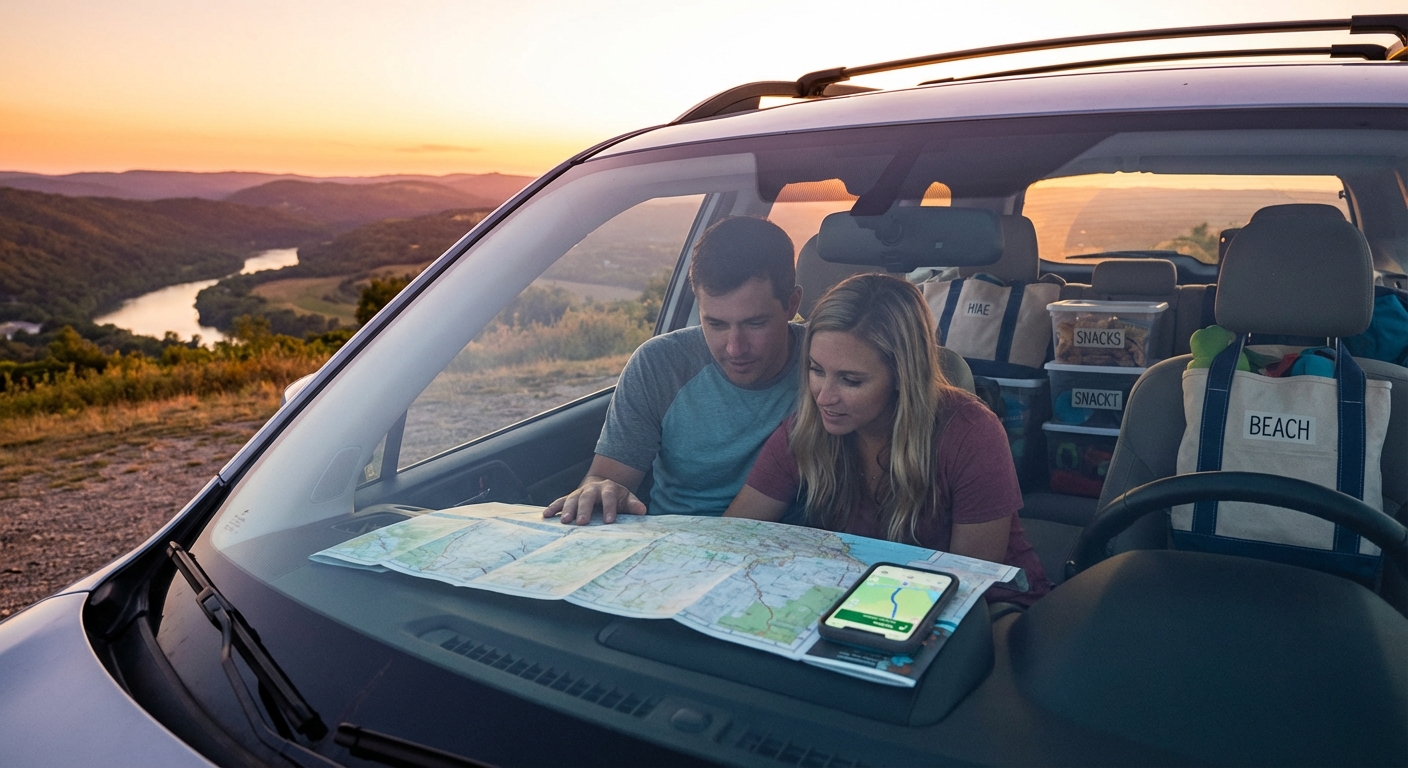
Spontaneity is romantic—until you’re sleeping in the car outside a fully booked town with a dead phone and an empty fuel tank. A great road trip balances wild detours with smart planning.
Adventure Loves Preparation
Use this playbook of 21 proven tips to keep your next road adventure thrilling and smooth, from budget hacks to packing systems and safety strategies.
Planning & Route Strategy
1. Plan in Zones, Not Hour‑by‑Hour
Instead of rigid itineraries, break your trip into regions or zones (e.g., “Southern Utah parks” or “Lake District & Highlands”). Define:
- 2–4 anchor sights per zone
- 2–4 nights per zone
This gives structure without strangling spontaneity.
2. Cap Daily Drive Time
More miles ≠ more adventure. Aim for:
- 4–6 hours max of driving on normal days
- 2–3 hours on days with big hikes or activities
Build in buffer days so if you fall in love with a spot, you can stay longer.
3. Use Three Map Layers
- Master map: Big picture route and must‑see stops.
- Offline app: Google Maps offline areas or Maps.me for navigation.
- Paper backup: Atlas or printed directions for no‑signal regions.
Mark fuel gaps, grocery stores, and campgrounds on your master map.
Budget & Money Moves
4. Define a Daily Spend Ceiling
Calculate a per‑day amount for:
- Fuel
- Food
- Accommodation
- Fun (activities, park fees, tastings)
Track it briefly each night in a notes app. If you go over one day, you’ll naturally course‑correct the next.
5. Cook Two Meals, Buy One
The fastest way to overspend is eating every meal out. A realistic formula:
- Make breakfast (oats, eggs, fruit)
- Pack lunch (sandwiches, wraps, salads)
- Eat dinner out a few nights a week for local flavor
If you love restaurants, reverse it: grab cheap breakfasts, cook simple dinners.
6. Choose “Sleep Cheap, Experience Rich”
Prioritize spending where it deepens the trip:
- Pay for a scenic kayak trip or canyon hike
- Save on chain hotels when you just need a shower and mattress
- National park or forest campgrounds
- Hostels/backpacker lodges with private rooms
- Small family‑run guesthouses outside city centers
Look for:
Packing & Gear Systems
7. Pack by Use, Not by Category
Instead of a bag for shirts and a bag for electronics, pack in modules:
- Sleep kit: pajamas, toiletries, earplugs, eye mask
- Day adventure kit: hiking clothes, swimsuit, micro‑towel
- Car kit: snacks, chargers, layers, entertainment
Grab one module and you’re set, instead of tearing through every bag.
8. Build a “Front Seat Command Center”
Keep within arm’s reach:
- Phone mount for navigation
- Multi‑port car charger
- Small trash bag
- Sunglasses & sunscreen
- Notebook/pen for quick notes and route adjustments
Designate one passenger as navigator/DJ, armed with this command center.
9. Create a Snack Arsenal
Snacks save money, moods, and time. Pack:
- Long‑lasting: nuts, trail mix, jerky, granola bars
- Fresh: apples, carrots, snap peas, cherry tomatoes
- Treats: chocolate, favorite candy or cookies
Refill from supermarkets, not gas stations.
10. Don’t Skip the “Mini‑Hardware Store”
Include:
- Duct tape and zip ties
- Multi‑tool or small toolkit
- Bungee cords and a length of paracord
- Extra car fuses (check your manual)
You’ll use these more than you think—for gear fixes, makeshift clotheslines, rattling trim, and more.
Lodging & Overnight Strategy
11. Book the High‑Demand Nights Only
If your route hits a very popular area (national park gateway town, coastal hotspot):
- Book those nights in advance
- Leave other nights flexible
This hybrid approach keeps stress down without locking you into every stop.
12. Aim to Arrive Before Dark
Rolling into a new place in daylight:
- Makes navigation easier
- Helps you assess safety and parking
- Gives time for a quick orientation walk
If you must drive at night, slow down in wildlife‑rich regions.
13. Rotate Splurge & Save Nights
Create a rhythm:
- 1–2 nights camping or budget stays
- 1 night splurge (boutique hotel, hot springs resort)
You’ll appreciate the nice places more and stretch your budget.
On‑the‑Road Safety & Wellness
14. Respect Fatigue Like Weather
Tired driving is as dangerous as bad weather. Build rules like:
- Switch drivers every 2–3 hours
- If solo, stop every 90–120 minutes for a brief walk and water
If you feel yourself zoning out, pull over—no view is worth the risk.
15. Hydrate More Than You Think
Dehydration sneaks up in cars. Keep:
- 2 L of water per person accessible
- Electrolyte tablets or powder for hot days/hikes
Yes, you’ll stop more often. That’s the point—more breaks, more viewpoints.
16. Stash a Real First‑Aid Kit
Include:
- Blister care (moleskin, tape)
- Assorted bandages and gauze
- Antiseptic wipes
- Painkillers and antihistamines
- Personal meds + copies of prescriptions
Review basics before you leave.
Making the Most of Each Stop
17. Ask Locals One Magic Question
Skip generic recommendations. Try:
> “If you had a free afternoon here with a visiting friend, where would you take them first?”
You’ll uncover unsignposted waterfalls, side roads, and cafes you’d never find on a listicle.
18. Prioritize One “Big Thing” Per Day
Instead of cramming, choose:
- One major hike, OR
- One full museum visit, OR
- One long kayaking/boat trip
Then let everything else be bonus. You’ll remember the day more clearly and enjoy it more deeply.
19. Collect Stories, Not Just Photos
Carry a small notebook. Jot down:
- Names of people you meet
- Fragments of conversations
- The smell of a place, the sound of a storm, the way light hit the canyon walls
These tiny details bring the trip back to life years later.
Tech, Tunes & Offline Fun
20. Build Multiple Playlists
Curate:
- Wake‑up mix for early miles
- Road epic for big landscapes
- Night drive for slower, reflective hours
Download podcasts and audiobooks for long stretches—road trips are perfect for deep listening.
21. Keep an “Analog Mode” Option
Pack:
- A deck of cards
- Tiny travel games
- A paperback book or two
Some of the best memories happen when the signal dies and you’re left with cards, conversation, and a star‑filled sky.
Put the Playbook into Action
Use these 21 tips as a checklist:
- Choose your route and zones.
- Set a realistic drive time cap.
- Draft your budget and decide your splurge points.
- Build your modules: sleep kit, adventure kit, car kit.
- Load your command center, playlists, and snacks.
Then point your wheels toward the unknown. You’ve done the prep; now your only job is to follow the road, say yes to the right detours, and collect the kind of stories that only come from moving slowly through the world.