
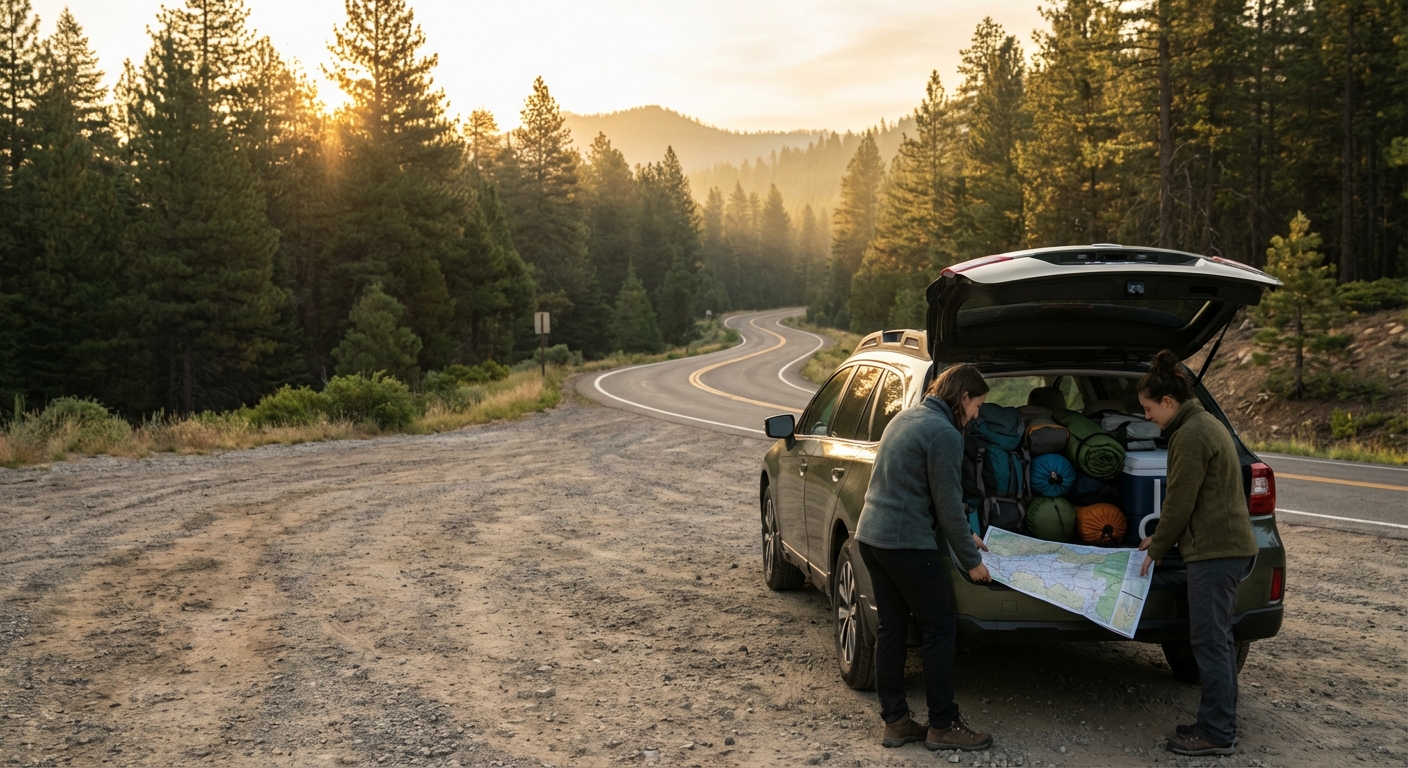
You don’t need months off work or a custom 4x4 to have a life‑shifting road trip. With a smart plan and the right gear, even a long weekend can feel like a real expedition—one that swaps your usual routine for trailheads, starry skies, and unfamiliar horizons.
Your First Big Drive Starts Closer Than You Think
This step‑by‑step guide walks you through planning your first adventure‑focused road trip, from picking your destination to packing the car.
Step 1: Define Your Adventure Style
First, be clear on what “adventure” means for you:
- Light adventure: Scenic drives, short walks, easy viewpoints, lake dips.
- Moderate adventure: Half‑day hikes, kayaking, cycling, moderate elevation.
- Full send: Long hikes, scrambling, early summits, or multi‑sport days.
- Destination choice
- Gear list
- Daily driving distance
Your style will shape your:
Pro move: If you’re unsure, aim for light to moderate on your first trip. You can always level up next time.
Step 2: Choose a Realistic Radius
Instead of scrolling far‑flung dream drives, look at what’s 4–8 hours from your home base. Within that radius, note:
- National or regional parks
- Mountain or lake regions
- Coastal sections with multiple beaches or coves
- Desert or canyon areas with trail networks
For a weekend (2–3 nights), pick one core area. For 5–7 days, you can comfortably combine two nearby regions.
Examples:
- City to mountains: Denver → Rocky Mountain NP / Indian Peaks
- Coast to forest: Seattle → Olympic Peninsula loop
- Inland to desert: Madrid → Sierra de Guadarrama & surrounding canyons
Step 3: Sketch a Simple Itinerary
Keep your plan straightforward:
For a 3‑day weekend:
- Day 1: Drive out, short hike or beach walk, set up base.
- Day 2: Full adventure day (trail, lake, or activity).
- Day 3: Sunrise mission or easy stroll, scenic route home.
- Days 1–2: Region A (mountains, coast, or canyons)
- Day 3: Transfer day via scenic drive, short stop en route
- Days 4–5: Region B adventures
- Day 6–7: Bonus day or slow return with extra stops
For 5–7 days:
Build around one main activity per day. Everything else is a bonus.
Step 4: Book Your Base(s)
For a first road trip, it’s easier to choose 1–2 base towns or campgrounds rather than moving every night.
Options
- Campground base: Affordable and close to trails; best for summer and mild shoulder seasons.
- Cabin or tiny house: Great mix of comfort and nature; ideal for first‑timers.
- Budget motel or guesthouse: Simple, efficient, and low‑stress.
Insider recommendation: Prioritize location over luxury. You’ll spend most hours outside; being close to the action matters more than a fancy lobby.
Step 5: Build an Adventure‑Ready Packing List
Think in systems, not random items.
1. Drive & Safety System
- Valid license, registration, insurance
- Printed copies of bookings and emergency contacts
- Spare tire, jack, and tire iron
- Jumper cables or compact jump starter
- First‑aid kit (bandages, blister care, meds)
- Headlamp/flashlight and extra batteries
2. Sleep & Comfort System
- For camping: tent, groundsheet, sleeping bags, sleeping pads
- For cabins/motels: sleep mask, earplugs, light blanket (optional)
- Travel pillow
- Lightweight slippers or sandals for evenings
3. Food & Kitchen System
- Cooler and ice packs
- Reusable containers and zip bags
- Camp stove and fuel (if cooking) + lighter/matches
- One pot, one pan, spatula, sharp knife, cutting board
- Reusable cutlery, plates, mugs
- Dish soap, sponge, small towel
- Breakfast: instant oats, fruit, eggs, yogurt
- Lunch: wraps/sandwiches, cut veggies, hummus
- Dinner: pasta with sauce and veggies, stir‑fry, chili
Simple meal ideas:
4. Clothing System (Layered)
- 2–3 moisture‑wicking shirts
- 1–2 pairs of hiking/active pants or shorts
- 1 warm midlayer (fleece or light down)
- Waterproof shell or rain jacket
- 3–5 pairs of socks (including at least 1 wool pair)
- Comfortable walking shoes or hiking boots
- Flip‑flops for showers/beach
- Hat, sunglasses, swimwear, and quick‑dry towel
5. Adventure Daypack System
- Small backpack (15–30 L)
- Water bottles or hydration bladder
- Snacks (nuts, bars, fruit, chocolate)
- Map or downloaded offline trail maps
- Sunscreen and insect repellent
- Mini first‑aid kit and emergency blanket
Step 6: Budget Like an Explorer, Not a Tourist
Create a simple daily budget for:
- Fuel
- Food (groceries + occasional meals out)
- Accommodation or campsite fees
- Activities (park passes, rentals, tours)
- Fuel: $30–$60
- Food: $45–$90 (mix of self‑catering and 1–2 meals out)
- Lodging: $40–$150 (campsites vs. basic rentals)
- Activities: $20–$60
Sample budget for a 3‑day starter trip (per person, shared car):
Total: ~$135–$360 depending on your choices and region.
Money‑saving tips:
- Cook at least breakfast and lunch.
- Share costs with a friend or two.
- Use weekly or annual park passes if you’ll return.
Step 7: Plan Two “Wow” Moments
To make your first road trip feel epic, design two intentional highlight experiences:
Examples:
- A sunrise hike to a viewpoint
- An evening at a hot spring after a long day
- A kayak rental on a mountain lake
- A sunset picnic at a cliffside overlook
Book or plan these anchors in advance so they’re locked in, then keep everything else flexible.
Step 8: Set Road Rules with Your Crew
If you’re traveling with others, a few quick agreements prevent drama:
- Driving rota: Who drives when, and what are your max daily hours?
- Music & noise: Rotating DJ, quiet hours in the morning/evening.
- Food preferences: Any dietary needs? How will you split food costs?
- Adventure level: Make sure no one feels pressured into activities beyond their comfort.
Write down shared expectations in a notes app so everyone can see them.
Step 9: Prep Your Vehicle
Do this 3–7 days before departure:
- Check oil, coolant, and windshield washer fluid.
- Check tire pressure (including the spare) and tread.
- Confirm your breakdown coverage and keep the number handy.
- Clean out the car and add a small trash bag.
- Unlimited mileage if possible
- A vehicle with good fuel economy and enough space for your gear
If renting, opt for:
Step 10: Embrace Flexibility on the Road
Once you’re rolling:
- Respond to weather. Swap hike days and drive days as needed.
- Follow curiosity. If you see an intriguing side road, farm stand, or viewpoint, pull over.
- Don’t chase everything. It’s okay to skip a stop to linger somewhere you love.
Insider recommendation: At the end of each day, spend five minutes noting what you loved most. Adjust upcoming days to include more of that—whether it’s swimming holes, cafes, forest trails, or ridgelines.
Your First Adventure Road Trip Starts Now
You don’t have to wait for “someday” or the perfect vehicle. Choose a destination in your 4–8 hour radius, set a weekend on the calendar, and start your packing list.
With the steps above, your first road trip won’t just be a drive; it’ll be your personal gateway into a bigger, wilder way of exploring the world. The map is already drawn—the only thing missing is your wheels on the road.